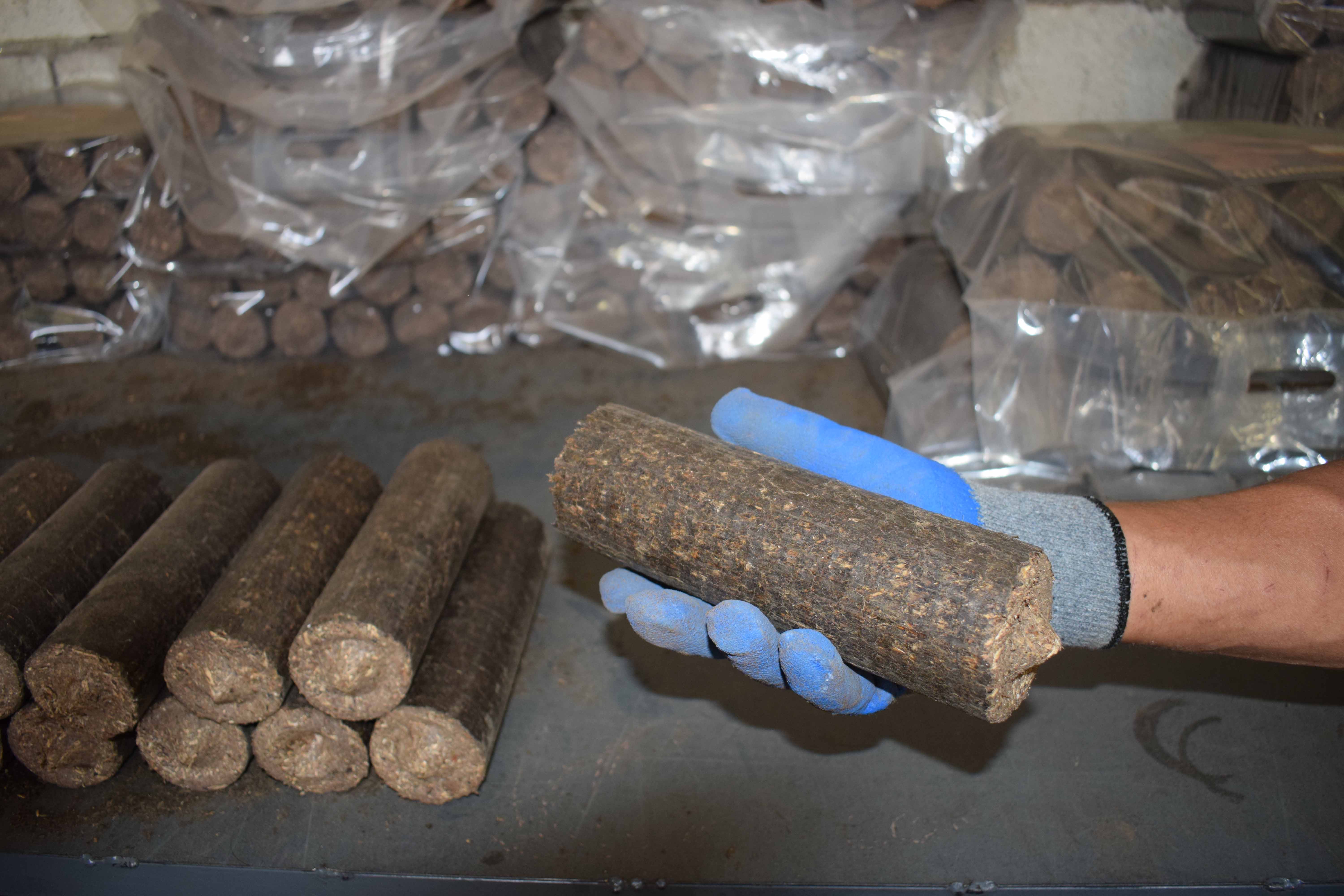
The biomass briquetting plant in Andket, Akkar, North Lebanon is located in the heart of one the largest Calabrian pine forests in Lebanon. The forest has an area of 1,564 hectares and provides the village and the surrounding area important economic activity from the pine fruits that are collected yearly, biomass heating and eco-tourism. In 2016, the UNDP CEDRO project funded by the EU implemented a 2.5 tons per day biomass briquetting plant that relies on the forest's pruning residues as the main source of raw material (85%) and agricultural residues from the surrounding area's apples (5%), vines (5%) and olives (5%) plantations for the remaining share. The mixture of pine wood and fruit trees improves the briquettes' consistence and quality. In 2019, the UNDP project funded by the Dutch kingdom implemented several optimization measures to the plant. These measures improves the yearly production rate from 300 tons per year to 450 tons per year. The briquettes are sold at an average price of $200 per ton depending on the location and the quantity of sale. The briquettes produced from the plant in Andket have relatively high energy content compared to other wood heating fuels. The 450 tons of briquettes when burnt in biomass heating stoves save 732 tons of CO2 per year when compared with diesel stoves and 1,700 tons of CO2 per year when compared to electric heating in Lebanon. Furthermore, the plant creates an additional economic incentive for forest management and pruning, as the harvested raw material are being bought by the plant at $40/ton. The improved management of the forest contributes positively to the forest's sustainability and decreases the risks of forest fires. Economically, the plant in Andket provides 5 full-employment opportunities and around 200 part time jobs during the pruning season.